Master One 9, 30 AM Opening Range Strategy and Trading Becomes Simple
You can order the same kind of articles for your own video to boost it on YouTube and Google. Just message the Telegram bot @sat_sit_bot. Articles with your video embedded are written and posted by the bot itself — on popular topical sites (no ads). Try it free: 50 articles on us.
· based on the channel Scarface Trades
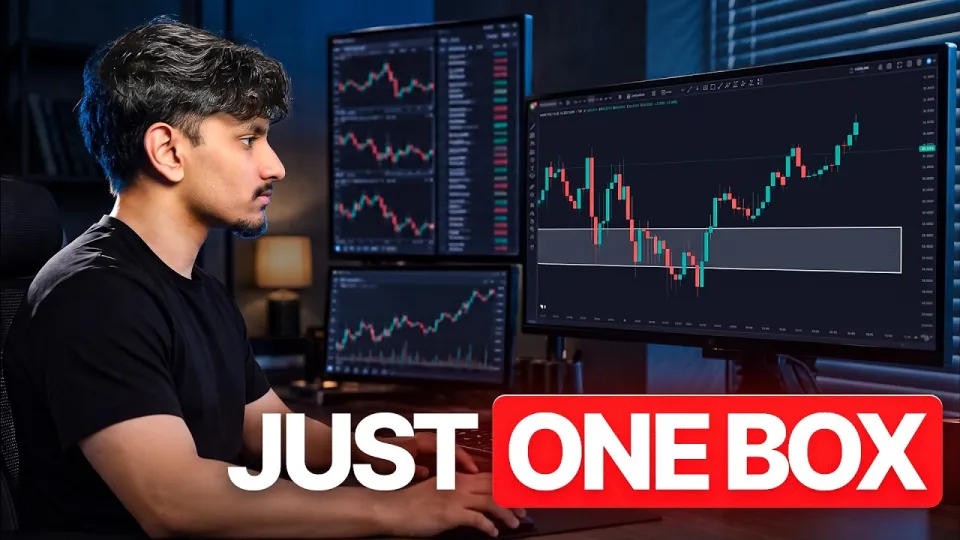
Trading becomes simple when you stop hunting setups all day and trade one repeatable pattern around a fixed time window. The approach popularised by the Scarface Trades channel does exactly that: mark a handful of levels before 9:30 AM New York, wait for price to break one, then enter on the retest with a tight, defined stop. The free Simple Trader Playbook course is the author's own walkthrough of that framework, and everything below is an independent breakdown of the logic behind it.
Why most traders make the 9:30 AM open harder than it is
The core problem is not a lack of strategies but an excess of them. A trader who watches two indicators, three trendlines and a news feed at the same time ends up with conflicting signals and no rule for which one wins, so every decision becomes a judgement call made under time pressure.
The opening 30 minutes amplify that. Volatility is at its highest, spreads widen, and price can sweep several levels in minutes. Traders respond by chasing the first big candle, entering late, and then widening the stop to avoid being wrong. The result is a strategy that looks obvious on a chart after the fact and feels impossible in real time.
A single-level, single-timeframe framework removes most of those decisions. You are not predicting direction; you are waiting for price to interact with a level you already marked and reacting to a defined trigger. Fewer inputs, fewer ways to talk yourself into a bad trade.
Step 1: set up the chart before the bell
Setup happens before the market opens, not during it. The goal is a chart with a small number of horizontal levels and nothing else competing for attention.
- Mark the premarket high and premarket low. These are the extremes reached in the hours before the 9:30 AM New York open and act as the first reference points for the session.
- Mark the previous day's high and previous day's low (PDH and PDL). These are the levels most participants watch, which is precisely why reactions tend to happen there.
- Keep the 1-minute chart as the execution timeframe and a higher timeframe for context, so you know whether price is in an uptrend, downtrend or range.
- Note where price sits relative to those levels. Directly under resistance or above support is a different situation from the middle of the range.
That last point matters more than it looks. If price opens in the middle of the PDH and PDL, there is no clean reference nearby and the setup quality drops. In that case the correct action is usually no action until price reaches a marked level.
Step 2: the rules that make the strategy tradeable
The strategy is a breakout-and-retest model with a fixed trigger, which is what separates it from random level trading. The rules are simple enough to write on one line each:
- Break: price closes beyond a marked level on the execution timeframe, showing that the level has actually given way rather than being pierced by a wick.
- Retest: price returns to the broken level from the other side. This is the moment of interest, because it offers a defined invalidation point.
- Trigger: a 1-minute candle closes in the direction of the break at the retest, confirming that the level is now acting as support (after a break higher) or resistance (after a break lower).
- Stop: beyond the level or beyond the low/high of the trigger candle, whichever gives a cleaner invalidation.
- Target: the next marked level, or a fixed multiple of the risk. If the next level is too close, the trade is skipped because the reward does not justify the risk.
Two filters keep the framework honest. First, the break should happen after the open, when volume is real; premarket breaks are far less reliable. Second, the retest should be shallow. If price pulls back deep into the range it broke out of, the breakout has failed and the setup is void.
Step 3: choosing the entry candle and sizing the position
The entry is a decision about one candle, not about the whole move. Once price returns to the broken level, you wait for a 1-minute candle to close in your direction and enter on the following candle, with the stop placed on the other side of the level or the trigger candle's extreme.
Because the stop is tight, the position size has to be calculated from risk rather than from conviction. A trader risking a fixed percentage of the account per trade divides that amount by the distance between entry and stop to get the number of shares or contracts. This is also the answer to the common worry that the setup requires an enormous position: the size is determined by the stop distance, and a tight stop on a 1-minute chart means a larger size than a swing trade with a wide stop, but the dollar risk stays the same.
Risk-reward should be checked before entry. If the nearest target level is closer than roughly twice the stop distance, the trade is not worth taking regardless of how clean the retest looks.
What the strategy does not solve
No framework removes the fact that most breakouts fail. The retest filter improves the average quality of entries, but it does not turn a losing day into a winning one, and it does not work in every market condition.
Choppy sessions are the obvious weak point. When price oscillates across a level without committing, retests trigger repeatedly and each one produces a small loss. A practical defence is to limit the number of attempts per level to one or two, and to stop trading the setup for the day after a set number of losses.
Speed is another constraint. The whole sequence — break, retest, trigger — can complete within a few 1-minute candles, which is uncomfortable for traders used to higher timeframes. The framework can be adapted to 5-minute or 15-minute charts with wider stops and smaller size, but the logic stays the same: level, break, retest, trigger.
Finally, hindsight bias is real. Setups look obvious once the candles are printed. The only way to know whether the rules hold up is to backtest them on a decent sample of sessions and forward-test on a simulator before risking capital.
Common questions from traders trying this setup
Which time zone should the levels be drawn in? The 9:30 AM reference is New York time. If you trade from another region, convert it once and keep it fixed, because the opening session behaviour is tied to the US cash open rather than to your local clock.
Does it work outside US stocks? The logic of premarket extremes and previous-day levels transfers to index futures, major forex pairs and liquid crypto, but the levels that matter differ by market. In forex, for example, the session open and the previous day's high and low carry more weight than a premarket range that barely exists.
How many instruments should one trader follow? Fewer than most people think. Two or three liquid names you know well beat a rotating watchlist of ten, because you learn how each one behaves around its levels. Switching tickers every day resets that knowledge.
Is the first 1-minute candle enough to define the range? It is a starting reference, not a full range. The first candle gives an immediate high and low to watch, but the more meaningful levels remain the premarket extremes and the previous day's high and low.
Useful links
- Free Simple Trader Playbook course: https://events.scarfacetrades.com/the-simple-trader-playbook-waitlist
- The Accelerator, private community and live trading: https://whop.com/scarface-trades
- Instagram: https://www.instagram.com/scarfacetrades_
- X: https://twitter.com/ScarfaceTrades_
Final thoughts
The 9:30 AM strategy is attractive because it replaces a screen full of indicators with four levels, one trigger and a fixed stop. That simplicity is the point: it makes each trade easy to review, easy to backtest and easy to size correctly. It will not make every session profitable, and choppy days will still produce losses, but the rules give you a clear reason to enter and a clear reason to stay out. The breakdown above is based on the framework presented by the Scarface Trades channel; if you want the author's own version, start with the free Simple Trader Playbook and paper-trade the rules before committing real capital.
Key takeaways
- The strategy is built around the 9:30 AM New York open and the first 1-minute candle of the session.
- Premarket high and low plus the previous day's high and low (PDH/PDL) are the only levels marked before the bell.
- Entry comes on a retest of a broken level, not on the breakout candle itself.
- Stop goes beyond the level or the trigger candle; the target is the next marked level, which keeps risk-reward measurable.
- The setup is a framework, not a guarantee: it needs backtesting and a fixed position size before real money.
Source: Once You Master This Strategy, Trading Becomes Incredibly Simple · Markdown version
Questions & answers
Where exactly do you enter on the retest?
You wait for price to return to the broken level and for a 1-minute candle to close in the direction of the break, then enter on the next candle. The stop sits beyond the level or the trigger candle's extreme, whichever gives a cleaner invalidation, and the target is the next marked level.
Does this strategy need a huge position size to be worth trading?
Position size is derived from risk, not from the size of the move. Because the stop on a 1-minute retest is tight, the share or contract count is larger than for a swing trade, but the dollar amount at risk stays fixed at your chosen percentage of the account.
What happens when price opens in the middle of the previous day's range?
There is no clean reference level nearby, so setup quality is poor. The disciplined response is to wait until price reaches the premarket high or low, the previous day's high or low, or to skip the session entirely rather than force a trade in the middle of the range.
Can the same rules be used on forex or crypto instead of stocks?
The level-break-retest logic transfers to any liquid market, but the levels themselves change. Forex and crypto do not have a US premarket in the same sense, so session opens, previous-day extremes and round numbers carry more weight, and the strategy should be re-tested on that market before use.